
Sidebench Sidebench
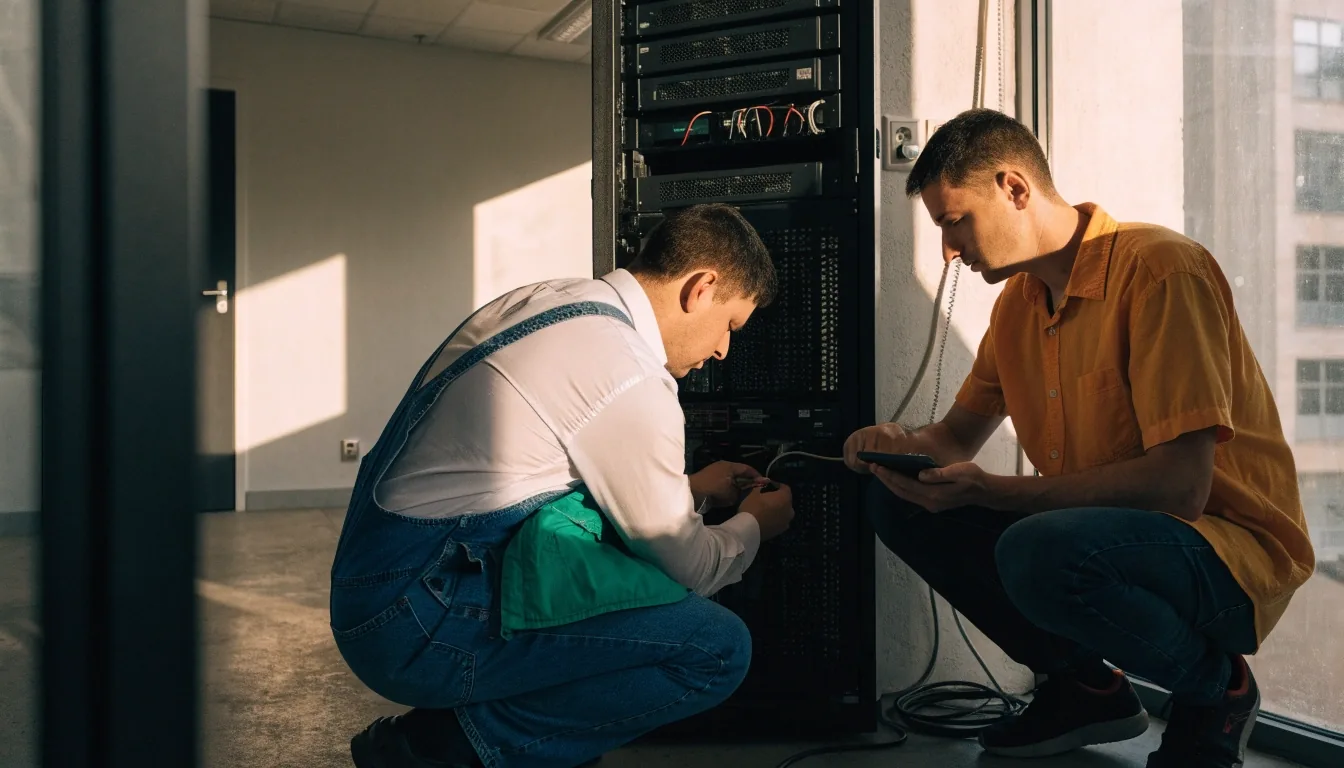
Sidebench team at work inside a Los Angeles software studio

Legal · Sidebench

Privacy Policy

This page explains what personal information sidebench.digital collects, why we hold it, how long we keep it, and how you can ask us to correct or remove it.

Applies to
sidebench.digital and its contact form
Effective date
October 15, 2026
Privacy requests
[email protected]

What this document covers

Sidebench is an IT development and AI solutions company based in Los Angeles. We build custom software, mobile apps, AI-powered products, and UX/UI design work for client teams. That work sometimes starts with a message through this website, which is where personal information first reaches us.

This Privacy Policy covers the website and the conversations that begin through it. Information exchanged under a signed client agreement is governed by that agreement, including its confidentiality and data-handling terms, so it is not repeated here.

Where a section below refers to cookies, device details, or browser records, the fuller description lives in our Cookie Policy. The obligations attached to using this site are set out in our Terms of Service.

Information we collect

We keep collection narrow on purpose. Most of what we hold about you is what you type into the contact form yourself.

What you send us

When you write to us about a project, the form asks for your name, your email address, your company name, and the details of what you want to build. That brief is the useful part: it tells us whether you need a mobile app, a piece of custom software, an AI feature inside an existing product, or UX/UI design work, and it usually saves a round of questions before we reply.

  • Name and email address
  • Company name and role
  • Project brief and expectations
  • Anything you choose to add

Please send only what the conversation needs. Do not include credentials, production keys, health records, or another person's private data in the brief.

What the site records

Standard technical details are recorded as you browse: the browser you use, the type of device, and which pages you opened. We use that to keep the site working and to see which service pages people actually read. Cookies and similar technologies are described separately in the Cookie Policy.

How we use information

Your submission is used to answer you and to decide whether we are the right studio for the work. Nothing more.

Reply to your inquiry

We read the brief, work out who on the team should answer, and write back with questions, a suggested scope, or a recommendation to talk to someone else.

Schedule conversations

If a call makes sense, we use your name, email, and time zone to find a slot and send the details. That correspondence stays tied to the project you raised.

Keep a record of the thread

Emails and form submissions are kept together so that whoever picks up the conversation sees the same context you already gave us.

Two commitments

We do not sell personal information, and we do not rent it out or trade it. If you send us a brief, it is not added to a mailing list you did not ask for.

We do not use contact-form submissions for unrelated marketing without your consent. If we ever want to tell you about something beyond the conversation you started, we will ask first.

Legal basis and consent

Some visitors are in places where a privacy law expects us to name the reason we are allowed to process personal data. Here is the short version.

Consent

You give it when you submit the contact form. Before we can reply to anything, we need the details you chose to send, and that choice is the basis we rely on.

Legitimate interest

Answering a business inquiry and keeping a normal record of client communication is a reasonable expectation when someone contacts a studio. We scope that interest to replying and to running the site, not to profiling you or building an advertising audience.

Withdrawing consent

You can take it back at any time. Write to [email protected] and say you are withdrawing consent for a submission. We stop using that information for anything beyond the record we are required to keep, and we tell you what we have done with it.

No automated decisions

A person reads your message. We do not use the contact form to run automated scoring, profiling, or decision-making that would have a legal effect on you.

If you are not sure which basis applies to your situation, ask us and we will explain it in plain language before you decide what to send.

Data retention

How long we keep a submission depends on what happens after it arrives. These are the three ordinary outcomes.

  1. Step one

    While an inquiry is open, we keep the submission and the email thread so anyone on the team can answer without asking you to repeat yourself.

  2. Step two

    If a project moves forward, records stay for the duration of the engagement and then for any period we are required to keep them by law, accounting rules, or the terms of the signed agreement.

  3. Step three

    If nothing results from the inquiry, we delete or anonymize the submission within a reasonable period. Because briefs often contain details a client would not want floating around indefinitely, we would rather clear them than keep them on file out of habit.

Backups follow the same schedule and are overwritten as part of normal rotation. If you want a specific submission removed sooner, ask us and we will tell you honestly whether that is possible.

Workstations and screens inside the Sidebench studio in Los Angeles

Sharing and third parties

We keep the number of companies touching your information as small as we can, and we choose them for a specific job rather than for convenience.

Who we work with

Our hosting provider keeps the site online and processes routine server records on our behalf. Our email provider carries the messages you send and our replies. Both are bound to handle data in line with this policy and to act only on our instructions, and neither is allowed to use your details for its own marketing.

Beyond that, we share personal information only where the law requires it, such as in response to a valid legal request, or where it is necessary to protect the rights and safety of the people involved.

What we never do

  • Sell, rent, or trade personal information
  • Publish a client brief as our own case study without permission
  • Move your details into an unrelated mailing list
  • Hand your information to a third party for its own advertising

Your rights

Depending on where you live, you may be able to ask us to do several things with the information we hold about you. We accept those requests at the address below.

Send requests to

[email protected]

Include the email address you used on the form so we can find the right record.

Contact us
Access and copies

You can ask what personal information we hold about you and request a copy. We will confirm what exists, where it came from, and what we have done with it.

Correction and deletion

If something we hold is wrong, tell us and we will fix it. If you want it removed, ask and we will delete what we can, unless a legal or accounting obligation requires us to keep a record of the transaction.

Objection and restriction

You may object to certain processing, or ask us to hold information without using it while a question is resolved. In practice that means we stop working with the record until you tell us to continue.

How we handle a request

We may ask a question or two to confirm that the request comes from the right person, then respond within the timeframe the applicable privacy law sets. If we cannot do what you asked, we will say why rather than leave you waiting.

Complaints

If our answer is not good enough, you can complain to the privacy regulator in your country. We would rather hear from you first, so write to us and we will try to resolve it directly.

Security

We take reasonable technical and organizational measures to protect information submitted through the site. Access to submissions is limited to the people at Sidebench who need it to answer you, on accounts that require sign-in, and we review what we hold instead of accumulating it.

No method of transmission over the internet is completely secure, and we cannot promise that information sent to us will never be intercepted. If you would rather not put something in a web form, say so in your first message and we will find another way to receive it.

If something goes wrong

If we ever become aware of a breach affecting your personal information, we will notify the people affected and the relevant authorities as required by applicable law, and we will describe what happened in plain language.

Questions about how we protect data can go to the same address used for privacy requests.

Changes to this policy

We may update this Privacy Policy from time to time, for example when the site adds a feature that handles information differently or when the law changes what we have to say. The current version always sits on this page, and the effective date at the top tells you when it last changed.

If a change meaningfully affects how we handle information you already sent, we will make that clear on this page rather than quietly rewriting the text. Continued use of the site after changes indicates acceptance of the revised policy. Earlier versions are available on request from the address in the contact section below.

Contact

For privacy-related questions or requests, contact Sidebench using the details below. We answer privacy email during normal business hours, Monday to Friday, 9:00 AM to 6:00 PM.

Phone
+1 415-584-8749
Address
149 South Barrington Ave, Los Angeles, CA 90049, USA

You can also read the Terms of Service that govern use of this site, or learn more about Sidebench and the IT development, mobile app, software, AI solutions, and UX/UI design work we take on.

The Sidebench office entrance on a quiet Los Angeles street at the end of the day